Mercury, Venus, Mars, Jupiter and Saturn have been known since prehistory for one reason: you can see them with the naked eye. Here is how to find them, and how to know that what you are looking at is a planet and not a star.
Planets do not twinkle
Stars are points of light, and turbulence in our atmosphere makes them flicker. Planets are tiny discs, so the flicker averages out and they shine steadily. If a bright "star" is not twinkling, it is probably a planet.
They stay near the ecliptic
All the planets orbit in roughly the same plane, so from Earth they appear along the same track across the sky that the Sun and Moon follow, called the ecliptic. If a bright object is far from that band, it is a star.
Planet by planet
- Venus is the brightest object after the Sun and Moon. It is never far from the Sun, so look low in the west after sunset or in the east before dawn. It is often mistaken for an aircraft or a UFO.
- Jupiter is the next brightest and can be visible all night. Even small binoculars show its four Galilean moons as a line of dots that change position from night to night, exactly as Galileo saw them in 1610.
- Mars is unmistakably orange-red. Its brightness varies enormously: at opposition, when Earth passes between it and the Sun every 26 months, it rivals Jupiter; at other times it is fairly ordinary.
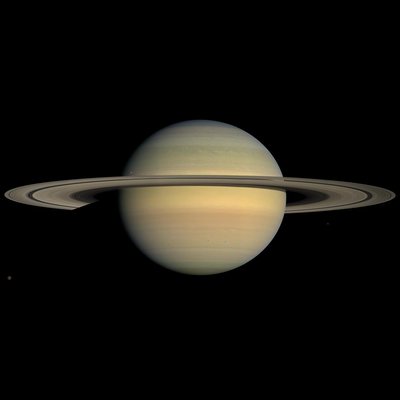
- Saturn looks like a steady, yellowish star. A small telescope at 30× or more shows the rings, which is a sight nobody forgets.
- Mercury is the hard one. It stays so close to the Sun that it is only visible for a couple of weeks at a time, very low in twilight. Catching it is a small badge of honour.
Uranus and Neptune
Uranus is technically naked-eye under a dark sky if you know exactly where to look. Neptune needs binoculars and a chart. Both appear as tiny blue-green discs in a telescope.
Use the map
Our interactive map shows where each planet is relative to the Sun on any date. A planet on the opposite side of the Sun from Earth is hidden in daylight; one on the same side as Earth, and roughly opposite the Sun, is up all night and at its best.