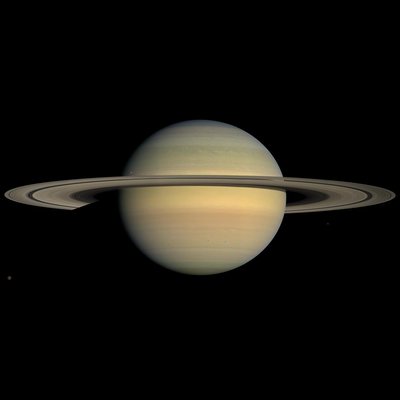
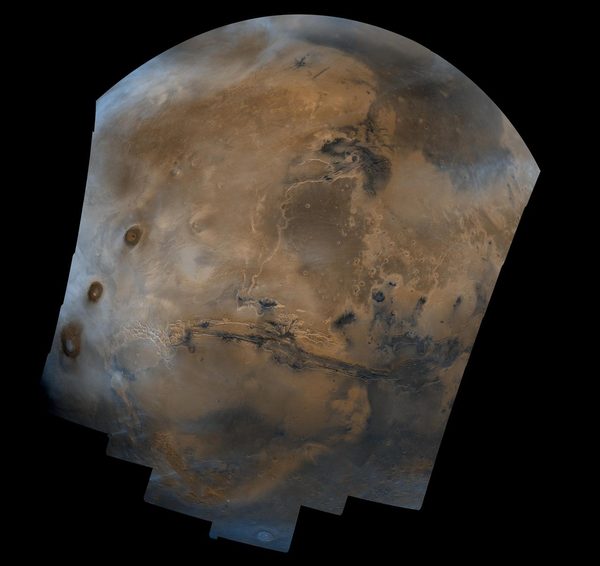
For 76 years Pluto was the ninth planet. Schoolchildren learned it, mnemonics ended with it, and a whole generation grew up with a Solar System of nine. Then, in August 2006, the International Astronomical Union (IAU) met in Prague and voted on a definition of the word "planet" for the first time. Pluto did not make the cut.
The problem was not Pluto. It was Eris.
Pluto had always been an awkward fit. It is smaller than seven moons, including our own. Its orbit is tilted 17° to the plane of the other planets and so elongated that for twenty years out of every 248 it is closer to the Sun than Neptune. From the 1990s onward, astronomers began finding other icy bodies in the same region, the Kuiper belt, and Pluto started to look less like the last planet and more like the first of a new population.
The crisis came in 2005 when Mike Brown's team at Caltech discovered Eris, an object in the outer Solar System that is slightly smaller than Pluto but 27% more massive. Either Eris was the tenth planet, with dozens more likely to follow, or a line had to be drawn. The IAU drew the line.
The three tests
Under the 2006 definition, a planet must:
- orbit the Sun;
- have enough mass for its gravity to pull it into a round shape;
- have "cleared the neighbourhood" around its orbit, meaning it gravitationally dominates its region.
Pluto passes the first two but fails the third. It shares its orbital zone with thousands of other Kuiper belt objects and has only a tiny fraction of their combined mass. Bodies that pass tests one and two but not three are now called dwarf planets. Pluto joined Eris, Ceres, Haumea and Makemake in that category.
Why people still argue
Critics point out that "clearing the neighbourhood" is vague, and that even Earth and Jupiter share their orbits with asteroids. Alan Stern, who leads the New Horizons mission to Pluto, argues that a definition based on what an object is (round, geologically active) is more useful than one based on where it happens to be. By that standard Pluto, with its nitrogen glaciers, mountains of water ice and possible subsurface ocean, is as planet-like as anything in the Solar System.
Whatever the label, New Horizons' 2015 flyby showed Pluto to be far from a dead lump of ice. It has a heart-shaped plain of flowing nitrogen ice, a hazy blue atmosphere and a moon, Charon, so large that the two orbit a point in empty space between them. Demotion, if anything, made Pluto more interesting.